
Four Things, Done on a Schedule You Can Plan Around
Seasonal Installation & Removal
Spring in once the ice is genuinely out, autumn out before the first real ice. Photographs of the dock, footings and shoreline every visit — which on a seasonal property is the only record anyone has.
Dock Repair
Ice damage, decking, footings, hardware and crib work. Found properly in a spring assessment rather than discovered in July when somebody puts weight on it.
New Dock Construction
Seasonal, roll-in, crib or permanent pile — chosen for what your frontage actually faces, not for what the neighbours have. Permitting path identified before the design is fixed.
Boat Lifts & Accessories
Lifts sized to the loaded boat and the real depth at your frontage, canopies specified for wind, installed and removed within the seasonal round.

New Hampshire Dock Permitting, in Plain English
Every dock contractor in this region will tell you permits are complicated. Almost none of them will tell you what the rules actually say. So here is the short version, and a tool that walks your specific project through it.
Wetlands permitting applies to all new docking structures and modifications — seasonal as well as permanent — and to boat and jet-ski lifts. “Seasonal” does not mean “unregulated.”
What it does mean is that a qualifying seasonal dock can often go through a Permit by Notification under RSA 482-A:3, IV-a rather than a full wetlands application — a considerably simpler and cheaper path. To qualify, broadly, the dock must be on a lake or pond, be the only docking structure on that frontage, be built to be removed and actually removed for at least five months a year, sit at least 20 feet from the abutting property line or its imaginary extension, be narrow, rectangular and perpendicular to the shore, require no regrading or concrete pad, comply with the Shoreland Water Quality Protection Act, and not be within 100 feet of a municipally designated prime wetland.
On waterbodies of 1,000 acres or more, with at least 75 feet of frontage, a qualifying seasonal dock may be up to 6 feet wide and 40 feet long; on smaller waters the allowance is 6 feet by 30 feet. Permanent docks are a different and narrower proposition: they may be permitted only on lakes larger than 1,000 acres, in locations where wind or wave conditions genuinely prevent the use of a seasonal dock.
This is a plain-language summary for orientation and is not legal advice. NHDES administers these rules and is the authority on how they apply to your property.
A Dock That Suits Waukewan Is the Wrong Dock for a Winnipesaukee Point
Exposure, depth, bottom and ice behaviour vary enormously across the region — and frequently within a single town. The structure that lasts thirty years in a sheltered cove will not survive three winters on an open shoreline, and the reverse is simply money wasted.
Lake Winnipesaukee
Seventy-two square miles and 250+ islands. Everything depends on which part of it you are on — open broads, sheltered bay, or busy channel where wake does the damage.
Squam Lake
Rocky, wooded, hard to reach, and a conservation culture that shapes what belongs on the shoreline. Low-impact methods are the expectation here, not the exception.
Newfound Lake
Deep, cold and steep-sided. Depth arrives fast, which changes dock length and footing strategy from the very first measurement.
Almost Everything We Repair, Ice Did
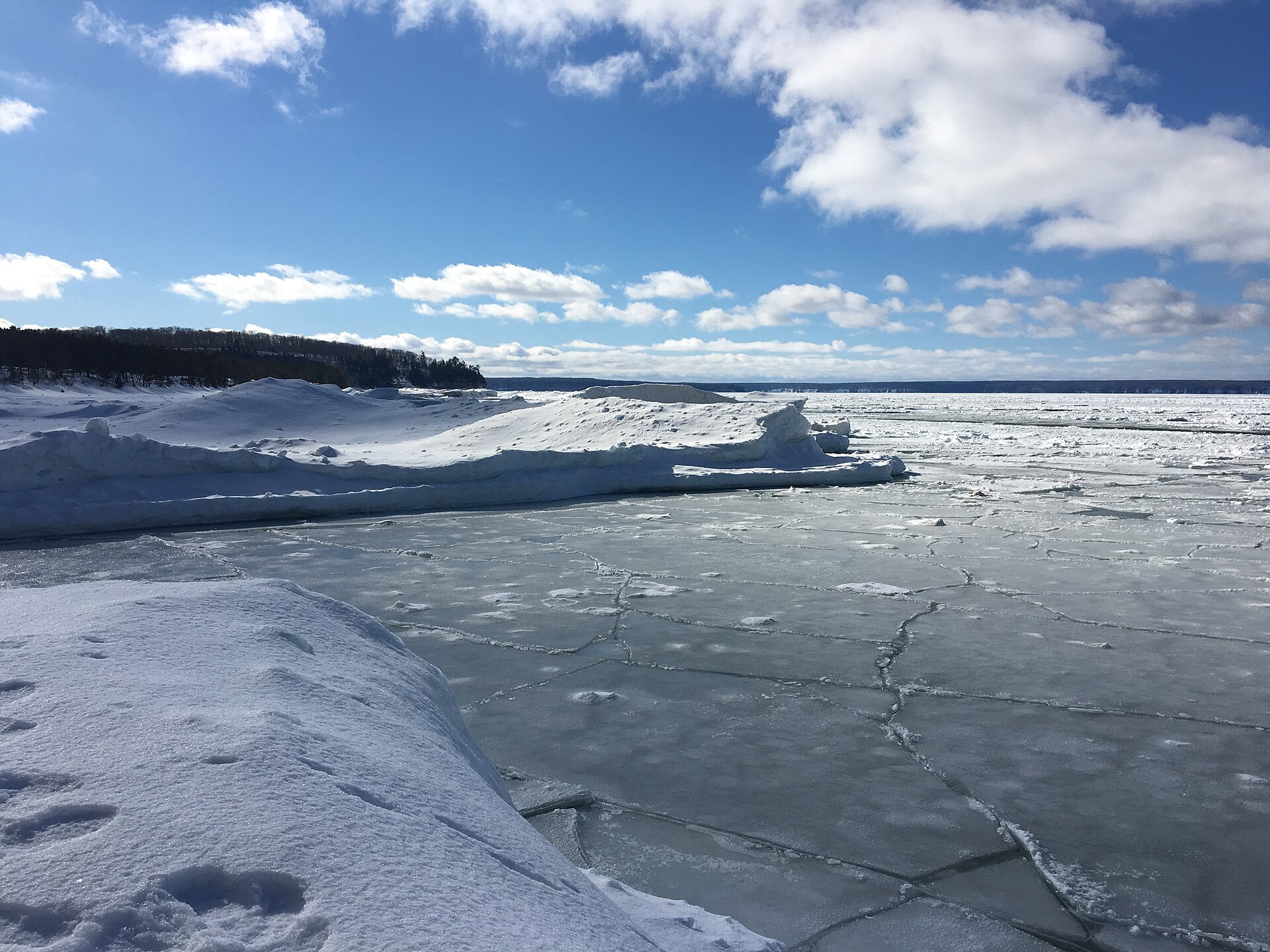
On sheltered water ice presses. It bends pipe, splays footings and compresses frames, and the damage is quiet, cumulative and almost invisible from standing on the deck. On exposed frontage ice moves, and the damage is sudden and obvious.
Both are found in a spring assessment rather than guessed at. A dock that looks perfectly level can be sitting on a bent pipe that will fail under load on the first hot Saturday in July.
The other half of this is timing. The single most effective thing any owner can do is take an early autumn removal slot rather than a convenient one — and to set that date by the water their dock is actually on. Alton Bay, Webster Lake and the Suncooks freeze well ahead of the broads.
Common Questions
Do I need a permit for a seasonal dock in New Hampshire?
Yes, in the sense that NHDES wetlands permitting applies to all new docking structures and modifications, seasonal and permanent, and to boat and jet-ski lifts. But many qualifying seasonal docks can proceed under a Permit by Notification under RSA 482-A:3, IV-a rather than a full application. Our permit wizard walks your project through the qualifying criteria, and the full summary sets out the detail. NHDES is the authority; this is orientation, not legal advice.
When should my dock come out of the water?
Before the first sustained ice forms, which is earlier than most owners expect. Sheltered water freezes weeks ahead of the Winnipesaukee broads, so setting your date by what the main lake is doing is how sheltered-water docks get damaged. Most of the ice damage we repair each spring happened to a dock that was in the water a fortnight too long.
What does a new dock cost?
Installed: seasonal pipe roughly $18–$28 per square foot, roll-in $24–$34, crib $40–$60, permanent pile $50–$75. A typical whole new dock lands between $3,000 and $30,000 depending on type, size and access. Decking drives the rest — cedar adds roughly 15–25% over pressure-treated, composite 35–60%, aluminium 50–80%. The configurator will put you in the right band.
Can you work on island properties?
Yes, and it is routine rather than exceptional. Materials, equipment and crew reach the Winnipesaukee islands by barge, which means weather governs the schedule in a way it never does on the mainland. Island work is scheduled with contingency built in, and if the dock is your only access to the property, book the spring install the previous autumn.
Should I repair my old crib dock or replace it?
Frequently worth repairing, and for a regulatory reason as much as a structural one: an existing legal structure may carry a permitting status a replacement would not inherit, and repair in kind is treated differently from reconstruction. Settle that question before ordering materials. We will tell you honestly when a structure is genuinely past saving.
How far ahead do I need to book?
For seasonal install and removal, a season. The autumn removal windows in particular are spoken for early, and late removal is the single most common cause of the damage we repair. For a new build, start in autumn for the following summer — permitting, not construction, is what sets that timeline.
Fifteen Waterfront Towns
Each town page covers what the water actually does to docks there — the exposure, the ice behaviour and the access.