
Two Numbers Decide Everything
Loaded weight, not dry weight. Manufacturers advertise hull weight. What your lift actually carries is the hull plus engine, fuel, batteries, water, gear and everything else that lives aboard by August. That figure is routinely several hundred pounds above the number on the brochure, and sizing to the brochure is the most common expensive mistake in this part of the trade. Size to loaded weight and leave margin on top.
Depth at your frontage, through the lift's full travel. A lift does not simply need water; it needs enough water to operate from fully lowered to fully raised with the boat clear. On steep frontage such as Newfound that is rarely a constraint. On the shallow Suncooks or the shallower stretches of Webster Lake, depth can decide the entire question — including whether a lift is practical at all.
Lifts need permits too. This surprises people regularly: NHDES wetlands permitting applies to all boat and jet-ski lifts, not only to docks. A lift is a structure in the water and it is regulated as one. Which route applies depends on your existing dock and what is already permitted on the frontage — worth establishing before you buy.
Can Your Dock Actually Take It?
A lift imposes a substantial, concentrated point load in a place most seasonal docks were never engineered to carry one. Fitting a lift to a dock that cannot take it does not produce a compromise outcome — it damages both, usually at the worst possible moment.
So we assess the structure before quoting a lift, and if it needs reinforcement we will say so plainly rather than fitting it and hoping. On a pipe dock in particular this is a real conversation, not a formality.
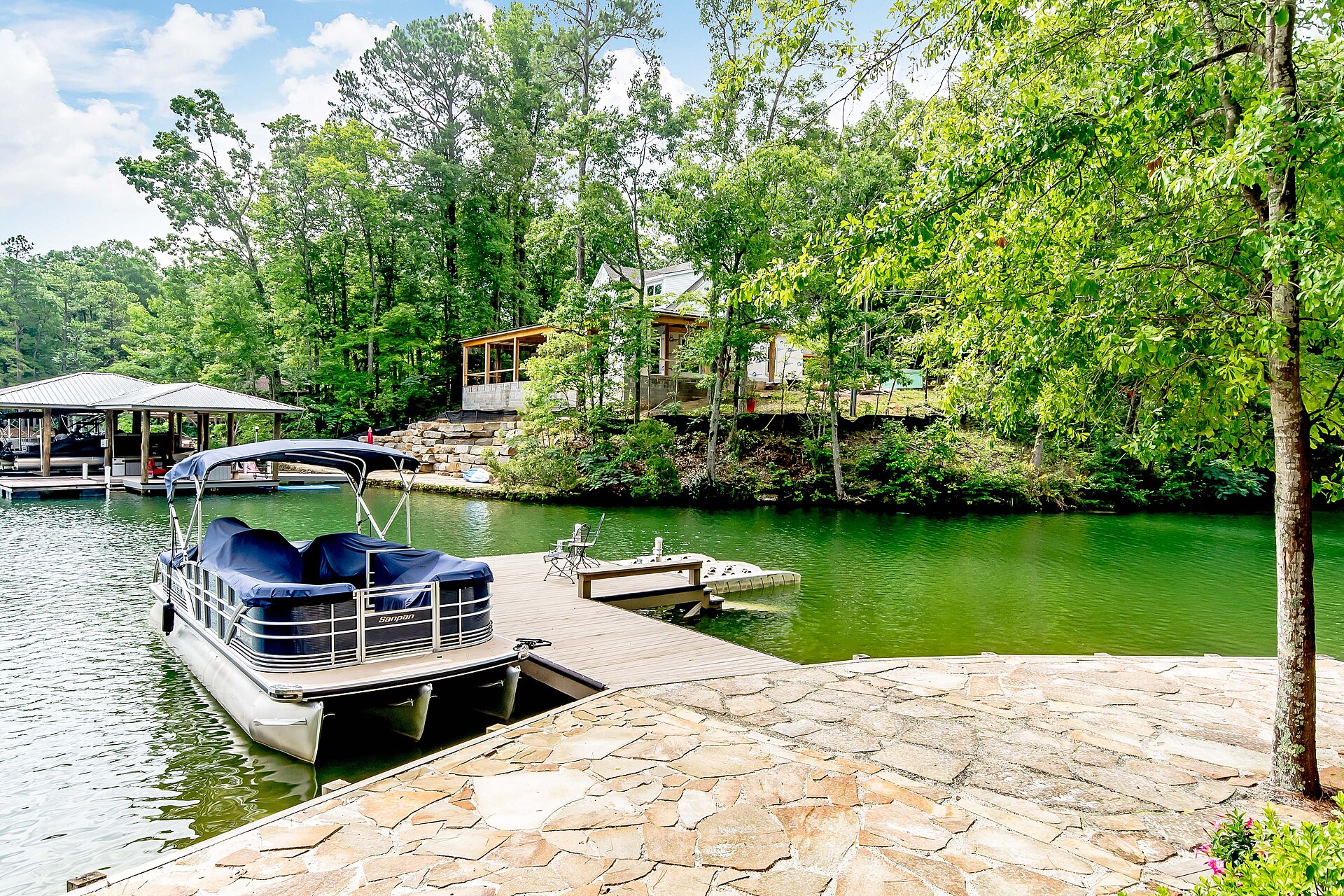
Canopies
They protect upholstery and gelcoat through a summer of UV, and they pay for themselves in resale condition on anything with fabric. On exposed frontage a canopy must be specified for wind rather than for appearance — a canopy that catches a November gust becomes a sail attached to your dock.
Swim platforms & rafts
Separate structures with their own anchoring requirements, and moored structures are not governed by the same rules as a dock attached to the shore. Ask before buying one; it is a short conversation and considerably cheaper than the alternative.
What Actually Makes a Dock Pleasant to Use
| Item | Typical cost | Worth knowing |
|---|---|---|
| Boat lift, supplied & installed | $4,000–$12,000 | By capacity. Size to loaded weight, not dry weight. |
| Canopy | $2,200–$6,000 | Specify for wind on exposed frontage, not for looks. |
| Ladder | $350–$750 | A safety item. The fixings matter more than the ladder. |
| Bumpers & cleats | $250–$700 | Cheapest hull protection after the lift itself. |
| Bench seating | $600–$1,600 | Adds weight and windage — worth a structural word first. |
| Dock lighting | $450–$1,400 | Solar is simpler; wired is brighter and needs planning. |
- Lifts sized to loaded boat weight and actual site depth
- Canopies specified for wind on exposed frontage
- Dock structure assessed for the load before fitting a lift
- Swim platforms and rafts anchored properly
- Installed and removed within the seasonal round
- Ladders and railings fitted to be safe under real use
Lift & Accessory Questions
What size lift do I need?
Size to the boat's loaded weight — hull, engine, fuel, batteries, gear — not to its advertised dry weight, then leave margin. Depth at your frontage matters equally, because a lift needs enough water to work through its full travel. Tell us the boat and we will tell you the capacity.
Can a lift go on my existing dock?
Often yes, but not always without reinforcement. A lift imposes a substantial point load many seasonal docks were never designed for. We assess the structure first and will say plainly if it needs work — fitting a lift to a dock that cannot take it damages both.
Do swim rafts need a permit?
They can, depending on size, anchoring and location. Moored structures are regulated differently from docks attached to the shore, and it is not safe to assume a raft is exempt because it floats. Ask first.
Does the lift come out every autumn too?
Yes, and in the same visit as the dock where access allows. A lift left in over winter has exactly the same argument with ice that a dock does, and it is a more expensive thing to lose.
Is a canopy worth it?
On anything with fabric, upholstery or gelcoat you care about, generally yes — a summer of UV does real and visible damage. The caveat is exposure: on open frontage the canopy has to be specified for wind, and a cheap one on an exposed point is a liability rather than an asset.