
Two Kinds of Ice Damage
Pressing — the quiet kind
On sheltered water, ice does not travel far. It expands, and it presses steadily against whatever is in it. On a dock that means pipe bent a few degrees, a footing splayed outward, a frame pushed fractionally out of square. Every individual symptom is small. None is visible from standing on the deck. And the effect accumulates across winters until a component fails under load — typically in July, typically with people on it.
Alton Bay, the backs of the Winnipesaukee coves, Webster Lake and the Suncooks are where we find this. It is the most under-diagnosed damage in the trade precisely because the dock looks fine.
Moving — the obvious kind
On exposed frontage ice has room to travel, and when a sheet moves it moves with enormous force. Sections displaced, footings sheared off, cribs shifted bodily, decking torn. The Gilford shore, the Moultonborough points and island frontage produce this. Nobody needs telling they have a problem.
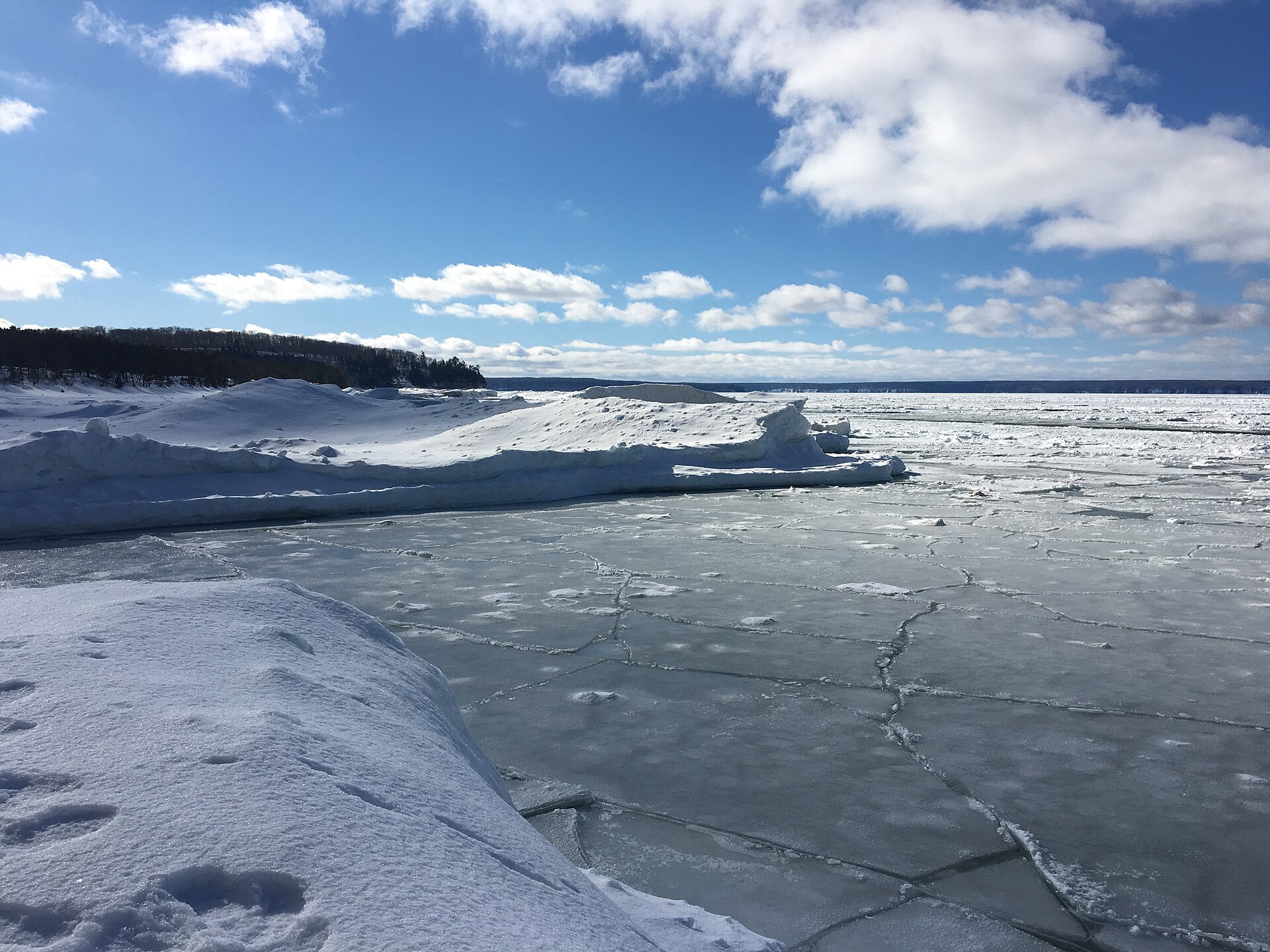
Why the quiet kind matters more
Moving ice produces an obvious problem that gets fixed. Pressing ice produces an invisible one that gets reinstalled, season after season, until it fails.
That is the entire argument for a spring assessment on a dock that appears undamaged. We are not looking for what you can already see. We are looking at the footings, the pipe and the connections — the parts holding the structure up, and the parts nobody checks.
What You Can Check Yourself
None of this replaces someone looking under the water, but it will tell you whether to be concerned.
| Check | What good looks like | What to worry about |
|---|---|---|
| Alignment to shore | Still square and straight out | A visible skew that was not there last year |
| Section joints | Lining up cleanly, no forcing | Sections that no longer meet, or need levering together |
| Level along the length | Consistent | A dip or rise over one footing — that footing has moved |
| Hardware | Tight | Bolts you can turn by hand; elongated bolt holes |
| Pipe at the waterline | Straight | Any visible bow or lean |
| Crib face | Intact, stones in place | Bulging, displaced stone, timbers sprung |
| Decking & railing | Solid underfoot, rails firm | Any movement at all in a railing — treat as a safety item |
Send us photographs. Ice damage is considerably easier to assess from pictures than from description, and we would rather look at images for free than have you guess.
Repair, or Replace?
For seasonal systems this is mostly a straightforward economic question. Components are replaceable: bent pipe gets straightened or swapped, a splayed footing gets reset, frames get squared. It is rare for a seasonal dock to be beyond economic repair unless ice has genuinely destroyed it.
For cribwork it is more involved, and there is a question that should come first.
Settle the regulatory question before the engineering one. Repair in kind of an existing legal structure sits in a different position from reconstruction or expansion. An existing legal dock may carry a status that a replacement would not inherit — which means a decision made casually on site, with a machine already there, can have consequences that outlast the dock. Establish what the structure's status actually is, and whether what you are planning counts as repair, before anything is demolished.
With that settled, the structural question is fairly clear-cut:
- Repair when the crib is sound and the damage is to decking, framing or the top structure
- Repair when stone has shifted but the crib retains its form and footing
- Replace when the crib has lost its shape, is bulging, or has settled unevenly
- Replace when timbers have rotted through below the waterline
- Assess carefully when the same crib has needed work three winters running — that is a pattern, not bad luck
And one more consideration people forget: if a structure is failing repeatedly, ask whether it was ever right for that frontage. A crib that keeps losing arguments with ice may be telling you something about exposure that a different structure would answer better.
How to Not Have This Conversation Next Year
Take the dock out earlier
By a wide margin the highest-value change available. Most ice damage happens to docks still in the water when the first ice formed, and on sheltered frontage that is weeks before the broads freeze.
Have it assessed in spring, every spring
Compression damage compounds. Finding a bent pipe in its first year is a straightening job; finding it in its third is a replacement and possibly a failure.
Photograph the removal
Documented condition each autumn is what lets you establish that damage is new, which matters for both diagnosis and insurance.
Match the structure to the exposure
If a system keeps failing, the answer may not be a better repair. Frontage that destroys seasonal docks may want crib; frontage that keeps wrecking cribs may want reconsidering entirely.
Questions
How can I tell if ice damaged my dock?
Frequently you cannot from the deck, which is precisely the problem. The commonest damage is compression — bent pipe, splayed footings, a frame out of square — and it is invisible on a dock that still looks level. Check alignment to shore, whether sections still meet cleanly, level along the length, and whether hardware has loosened. Then have someone look below the waterline.
Will insurance cover it?
Sometimes, depending on the policy and on whether it reads as a sudden event or as deferred maintenance. Dated photographs from the previous autumn's removal are genuinely valuable in making that case — which is one of the quieter arguments for using a contractor who documents every visit rather than one who does not.
My dock has been fine for years. Why now?
Usually either an unusually hard freeze-up, a late removal, or compression damage that has been accumulating quietly and has finally reached the point of failure. The third is the most common, and it is why a dock's first visible problem is frequently its third winter of damage.
Can you repair a dock somebody else built?
Yes, routinely — a good deal of our repair work is on structures we did not install and whose original builder is long gone. Send photographs and we will tell you what we can see before coming out.