
What Actually Changes
The engineering of an island dock is not fundamentally different from a mainland one. What is different is everything around it.
Weather governs an island schedule in a way it never governs a mainland one. A day lost to wind is a day lost entirely, not a job pushed back two hours.
That single fact reorders the whole job. Materials, equipment and crew arrive by barge, which means the crossing has to be workable. Loads have to be planned rather than improvised, because there is no running back for a forgotten bracket. And a structure deliverable in sections is a categorically different proposition from one requiring heavy plant on the shoreline.
We build contingency into island scheduling for this reason, and we are straight with owners about it — because promising an island date we cannot control helps nobody, least of all the owner planning a season around it.
Island Docks Work Harder Than Mainland Docks
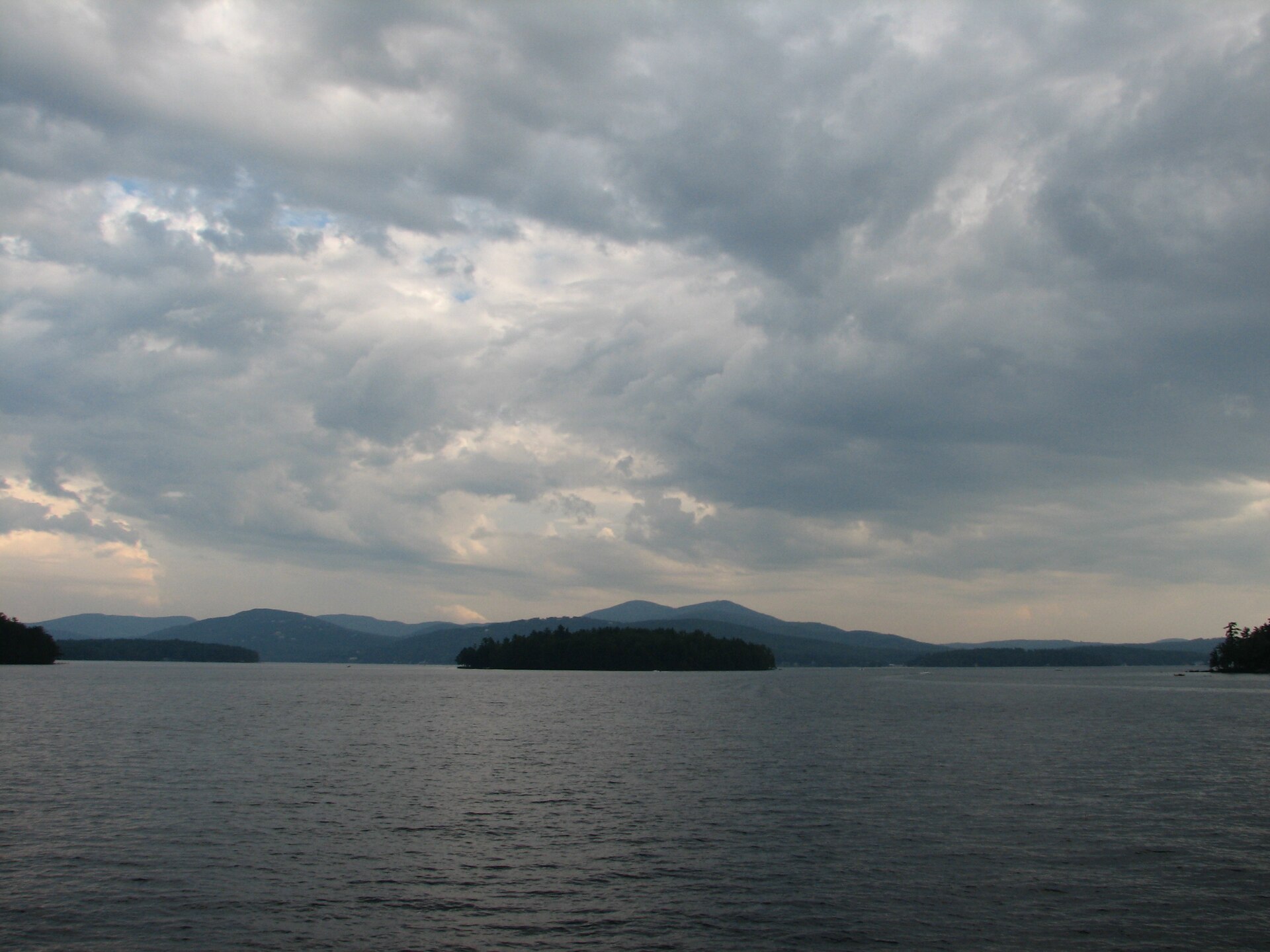
An island is, by definition, surrounded by open water. That means exposure on at least one face and frequently several, and it means ice has unobstructed room to move in whatever direction the winter decides.
The practical consequences:
- Footings need to be more substantial than an equivalent sheltered mainland dock
- Hardware needs annual attention rather than occasional attention
- The autumn removal date is less forgiving — there is nothing between the dock and the lake
- Wind-driven wave action loads the structure from directions a cove never would
- On the more exposed islands, crib construction is frequently the honest answer
- Every repair carries barge mobilisation, so preventing damage is worth more here than anywhere
That last point deserves emphasis. On the mainland, deferring a small repair costs you a small repair later. On an island it costs you a barge trip, which changes the arithmetic of maintenance entirely and argues strongly for doing things while we are already there.
How to Make Island Work Go Smoothly
Book the previous autumn
Especially the spring install. Weather will take days out of any island schedule, and position in the queue is the only real protection. If the dock is your only access to the property, this is not optional — it is the first item of your season.
Tell us everything in one go
Dock, lift, canopy, decking, that railing that has been loose for two years. Bundling work into one mobilisation is dramatically cheaper than three separate trips, and on an island it is the single biggest saving available to you.
Be realistic about dates
If you need a hard date — a family arrival, a sale, a wedding — say so at the outset so we can schedule with room. We would rather build a week of margin in than explain a wind delay on the day.
Expect photographs rather than site visits
You are unlikely to be standing on the island while we work, so documentation substitutes for supervision. Every island job is photographed thoroughly for exactly that reason.
Think about what else needs barging
If we are bringing a barge, there may be other things that want moving. It is worth asking — a shared trip is far cheaper than a dedicated one.
Island Frontage, Same Rules
Island properties sit under exactly the same NHDES framework as mainland ones. Wetlands permitting applies to all new docking structures and modifications, and to lifts. The seasonal notification criteria — only structure on the frontage, 20-foot setback, five-month removal, no shoreline modification — apply identically.
Two island-specific wrinkles are worth knowing. Frontage measurement on a small island can be less obvious than on a straight mainland shore, and it decides your size allowance. And exposure, which is the test for whether a permanent dock is justifiable on a lake over 1,000 acres, is frequently easier to demonstrate on an island than anywhere else — which occasionally makes a permanent structure a realistic option where it would not be on the mainland nearby.
Run your project through the permit wizard, and see the full summary for the criteria. As always: orientation, not legal advice, and NHDES is the authority.
Questions
Do you really service the islands, or is that a maybe?
Routinely. Barge access is a normal part of how we work rather than an exception we make reluctantly. Tell us which island and what shoreline you have and we will tell you plainly what is practical.
Why does it cost more?
Because the barge is the cost, not the dock. Materials, equipment and crew all travel by water, mobilisation is planned rather than improvised, and weather can remove a working day entirely. The dock itself costs what it would on the mainland.
What if the weather ruins the schedule?
Sometimes it does, and we would rather say so in advance than pretend otherwise. We build contingency in, we keep you informed as conditions develop, and we prioritise properties where the dock is the only access. What we will not do is promise a date that depends on wind we cannot control.
Can you do repairs mid-season?
Yes, though it is worth bundling. A single trip covering several jobs is dramatically better value than a trip for one bracket. If something is unsafe, tell us and we will treat it accordingly — a failed railing on a dock that is your only access is a different order of problem.
Can I have a permanent dock on my island?
Possibly, and more plausibly than on much of the mainland. Winnipesaukee is over 1,000 acres, and the test for a permanent structure is whether wind or wave conditions prevent the use of a seasonal dock — a case that exposed island frontage is frequently well placed to make. It is still a full wetlands application, so start it early.